

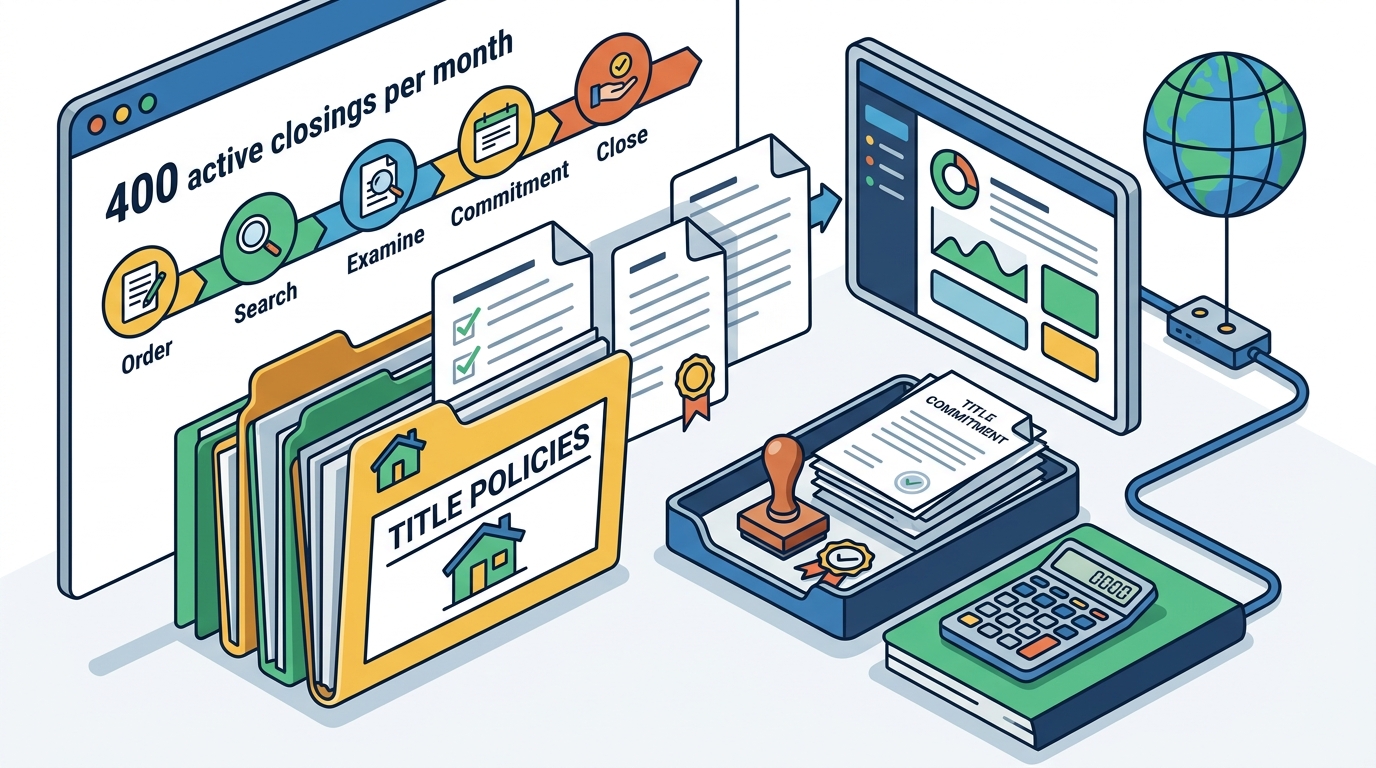
Modern title operations face mounting pressure to process transactions faster while maintaining strict regulatory compliance. According to industry benchmarks, the average title company now manages over 400 active closings per month, which creates severe bottlenecks in document review and compliance verification. Back-office support is the systematic outsourcing of administrative, compliance, and transactional workflows to specialized teams. When leadership struggles to hire and train in-house staff quickly, partnering with a dedicated staffing provider becomes the only scalable solution. This guide examines how title companies can integrate reliable back-office support without compromising accuracy or turnaround times. (Contact Us)
The Back-Office Bottleneck in Modern Title Operations
Title production has shifted dramatically over the last five years. Buyers expect digital closings, while regulators demand stricter anti-money laundering checks. In-house teams frequently struggle to balance these competing demands. Staff turnover rates in the title sector consistently exceed 25 percent annually, according to labor market data. This constant churn drains training budgets and delays closing schedules. Leadership must recognize that hiring general administrative staff rarely solves the problem. Specialized staffing partners understand the exact terminology, software ecosystems, and compliance checkpoints required for successful closings.
External staffing agencies often lack industry-specific training. They place generalists who require months of onboarding. Title companies lose revenue during those ramp-up periods. A dedicated provider like GDL Connect builds teams that already understand the workflow. You gain immediate capacity without sacrificing quality. Explore our back-office support offerings to see how specialized teams integrate directly into your existing production pipeline. (30 Staffing Industry)
Core Functions That Require Specialized Staffing
Effective back-office support covers multiple critical workflows. Each function demands specific technical knowledge and software proficiency. Escrow coordination is the systematic management of funds, documents, and closing timelines across all parties in a real estate transaction. Document preparation is the accurate drafting, formatting, and verification of loan documents, deeds, and affidavits before submission. Title search and examination is the detailed review of public records to identify liens, easements, and ownership history.
Leadership must map these functions to their current capacity gaps. Many companies struggle with document preparation because errors trigger rework cycles. Others face delays in escrow coordination when closing dates shift unexpectedly. A flexible staffing model allows you to scale specific departments up or down based on monthly production volume. Learn how escrow coordination services reduce closing delays and improve cash flow predictability. (Data Driven Leadership)
Software integration remains a critical factor. Modern title platforms require staff who can navigate complex databases without constant supervision. Dedicated providers train their teams on industry-standard software before deployment. This reduces error rates and accelerates transaction velocity. You retain full oversight while gaining immediate operational capacity.
How GDL Connect Structures Title Support Teams
Scalable staffing requires a structured deployment model. GDL Connect designs support teams around your exact production metrics. We assign dedicated account managers who understand your specific software stack and compliance requirements. Each team member undergoes rigorous training on title insurance fundamentals, anti-fraud protocols, and closing document standards. This preparation eliminates the typical three-month onboarding delay that plagues general staffing agencies.
Our deployment framework includes three distinct tiers. Entry-level support handles document routing and basic data entry. Mid-level coordinators manage escrow timelines and client communications. Senior specialists oversee complex title examinations and compliance audits. This tiered structure ensures you only pay for the expertise your transactions actually require. Review our document preparation workflows to understand how specialized teams maintain accuracy under high-volume conditions.
Quality assurance remains embedded in every workflow. Dedicated supervisors conduct random audits on completed transactions. Error rates typically fall below 1 percent when standardized checklists are enforced. This level of precision protects your company from regulatory penalties and client disputes. Leadership gains predictable output without managing daily staff schedules.
Compliance and Risk Management in Remote Workflows
Regulatory scrutiny in the title sector continues to intensify. Federal agencies enforce strict anti-money laundering guidelines, while state regulators mandate specific disclosure timelines. Remote staffing models must replicate these compliance standards without physical oversight. Data security protocols require encrypted file transfers, role-based access controls, and continuous audit trails. Staff members undergo mandatory compliance training before handling sensitive transaction data.
According to industry compliance reports, over 60 percent of title companies face regulatory penalties annually due to procedural errors. This statistic highlights the critical need for standardized workflows. Dedicated providers implement compliance checkpoints at every transaction stage. They track regulatory changes and update internal procedures automatically. Your company avoids costly fines while maintaining a clean operational record. (Corporate Training Industry)
Risk mitigation extends beyond regulatory compliance. Fraud prevention requires staff who can spot red flags in loan documents, wire instructions, and identity verification forms. Specialized teams are trained to recognize common closing fraud patterns. They escalate suspicious activity immediately to your licensed managers. This proactive approach protects your brand reputation and client trust. Meet the specialists who manage compliance and risk across our client portfolio.
Measuring ROI Through Scalable Staffing Models
Leadership must quantify the financial impact of back-office support. Traditional in-house hiring requires recruiting costs, benefits packages, workspace allocation, and software licenses. Outsourced support converts these fixed costs into variable expenses. You only pay for active transaction hours or completed deliverables. This model dramatically improves cash flow predictability during slow production months.
According to operational efficiency studies, companies that adopt specialized back-office support reduce closing cycle times by 30 percent within the first quarter. Faster closings generate quicker fee collections and improve client satisfaction scores. Staffing flexibility allows you to accept larger transaction volumes without hiring permanent employees. This scalability directly correlates with revenue growth and market expansion.
Performance metrics remain transparent and measurable. Dedicated providers deliver weekly production reports, error rate tracking, and turnaround time benchmarks. Leadership can adjust staffing levels instantly based on seasonal demand. This agility prevents burnout during peak periods and eliminates idle payroll costs during lulls. Schedule a consultation to calculate your exact ROI potential.
Comparing Staffing Models for Title Operations
| Model Type | Cost Structure | Training Requirements | Scalability | Best Use Case |
|---|---|---|---|---|
| In-House Hiring | Fixed salaries and benefits | 3 to 6 months onboarding (Effectiveness of formal) | Low flexibility | Stable, predictable production volumes |
| General Staffing Agency | Hourly rates with markups | 2 to 4 months industry training | Moderate flexibility | Basic administrative support tasks |
| Specialized Title Support | Variable transaction-based pricing | Pre-deployment certification | High scalability | High-volume closings and complex compliance |
| Hybrid Leadership Model | Blended fixed and variable costs | Targeted skill supplementation | Adaptive scaling | Phased expansion and seasonal peaks |
Key Takeaways
- Specialized back-office support eliminates the 3-month onboarding delay typical of general staffing agencies.
- Escrow coordination and document preparation require industry-specific software proficiency and compliance training.
- Tiered staffing models allow title companies to scale specific departments based on monthly production volume.
- Compliance checkpoints and fraud prevention protocols protect companies from regulatory penalties and client disputes.
- Variable cost structures convert fixed payroll expenses into predictable transaction-based pricing.
- Quality assurance audits typically maintain error rates below 1 percent when standardized workflows are enforced.
- Scalable staffing directly correlates with faster closing cycles and improved cash flow predictability.
Frequently Asked Questions
How quickly can a specialized staffing provider integrate with our existing title software?
Dedicated providers typically integrate within 5 to 10 business days. Teams receive pre-deployment training on your specific software stack and compliance protocols. This preparation eliminates the extended onboarding periods that plague general staffing agencies.
What happens if our transaction volume drops unexpectedly?
Flexible staffing models allow you to reduce allocated hours or team size without penalty. You only pay for active transaction work or completed deliverables. This variable cost structure protects your cash flow during slow production months.
How do providers ensure data security for sensitive transaction files?
Dedicated teams operate within encrypted environments with role-based access controls. All file transfers utilize secure, audited channels. Staff members undergo mandatory security training before handling any client data.
Can back-office support handle complex title examinations and underwriting tasks?
Senior specialists manage complex title examinations, underwriting support, and compliance audits. These roles require extensive industry experience and regulatory knowledge. You retain final approval authority while gaining specialized expertise.
What metrics do providers use to track team performance?
Dedicated agencies track error rates, turnaround times, transaction completion rates, and client satisfaction scores. Leadership receives weekly production reports with transparent benchmarks. This data enables continuous workflow optimization.
Next Steps for Title Company Leadership
Scaling your back-office capacity does not require permanent hiring commitments. Specialized staffing partners provide immediate access to trained professionals who understand title insurance workflows. You gain predictable output, faster closing cycles, and reduced compliance risk. Review our service frameworks and schedule a direct consultation with our operations team. Contact GDL Connect today to build a support model that scales with your production goals.